Tectonic Shifts: The Way the World Used To Turn
History has a shape. A decision lifted above the nation becomes a life the nation cannot appeal.
Whit Boone - Avenues
History. What resistance actually costs.
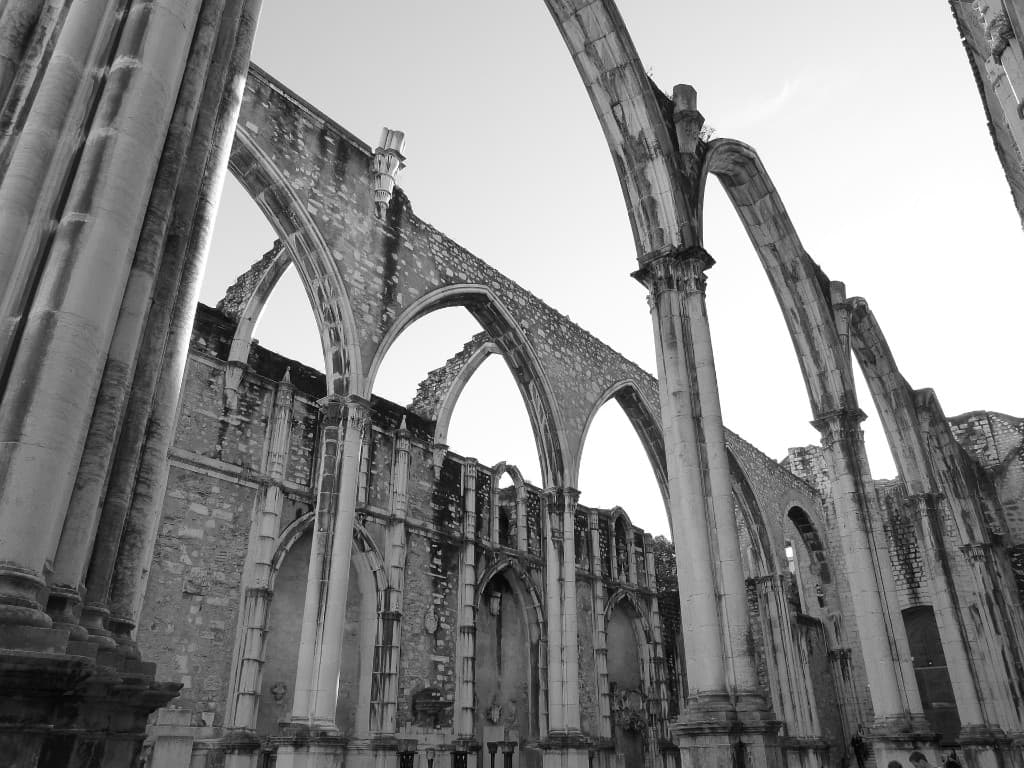
Lisbon, Open Since 1755
loggawiggler (Pixabay)
History has a shape. A decision lifted above the nation becomes a life the nation cannot appeal. The papers being signed this year are that shape again.
How the World Used To Turn
Rome built a government for the lands around the Mediterranean. One law. One army. Roads that brought the grain to the capital, and a center that called the arrangement peace. In the year 476 the last western emperor was deposed. The eastern half did not die. It went on from Constantinople until the city fell in 1453, and it had its own church.
In the west, new governments rose in the pieces. Frankish kings. Gothic kings in Spain. Later the kings of England, of Castile, and of Portugal. They were armed men who had taken a country and wanted a law to bless it. The religious power over those Latin kingdoms was the Holy Roman Catholic Church. A king was crowned by it. A parish kept the book of births and deaths. A subject met God through a priest that Church had appointed. This was not a loose word for every Christian people. It was one church, established beside the governments, and the governments used it.
The Holy Roman Empire is a different institution, and the similar name ruins maps. It was the German imperial title, from the crowning of Otto I in 962 until Francis II dissolved it on 6 August 1806. It never governed Spain, Portugal, or the Americas. Charles V is why the names get welded. He was King of Spain by inheritance, and in 1519 he was elected emperor. Spain was his other crown. The American kingdoms belonged to Castile. Brazil belonged to Portugal.
That was the turn. An empire, then kings, then one church standing between a man and God and calling the arrangement order. People lived that way for centuries because the alternative was a field full of armed men and no register of who owned the ground. Order of that kind has a destination. The man in the middle stops being a clerk. He becomes the person who must approve the life.
The Armies That Reached Spain
Muhammad died in 632. He did not reach the Atlantic. Armies of the caliphate that followed him entered the Visigothic kingdom in 711, took most of Iberia, and were stopped in Frankish land at Tours in 732. Christian kingdoms spent seven centuries taking the peninsula back. Granada, the last Muslim kingdom, fell in 1492.
Ferdinand and Isabella did the retaking with the Holy Roman Catholic Church as a piece of the state. In 1478 they obtained a papal bull for the Spanish Inquisition. On 31 March 1492 they ordered the Jews of Spain to convert or leave. Muslims in Castile were ordered to convert or leave in 1502. Their descendants, the Moriscos, were expelled beginning in 1609. The usual estimate of that last expulsion is a few hundred thousand people. The headcount of 1492 is disputed, so the decree is the fact to keep. France did not run the same policy. Its great drive against Protestants came later, when Louis XIV revoked the Edict of Nantes in 1685.
The crowns that had fought for seven centuries, and had kept one church inside the government, were the crowns that then sailed south. They did not leave the priest at home. They built him into the American parish, the school, and the record of the town. Control that has just won a long war does not volunteer to become a town meeting.
The Split That Crossed the Ocean
The press came before the preacher. Around 1450 Johannes Gutenberg put a machine in Europe that could give the same book to many hands. In 1517 Martin Luther posted his theses. A Christian, he said, answers to God on the authority of Scripture, by faith, and does not require a priest as the mediator. Princes in parts of Germany took the doctrine and also took the church lands. Scandinavia took it. The Dutch took it. Scotland took it. In 1555 the Peace of Augsburg let each German prince pick the religion of his own territory. In 1648 the Treaty of Westphalia accepted that Latin Europe would not be forced back under one church. A split of that kind is not a seminar. It is a decision about who may command a conscience, moved from one set of men to another. Some of the new men were no gentler than the old.
England broke by a king before it broke by a sermon. In 1534 Henry VIII made himself head of the church in his country. His daughter Mary, from 1553 to 1558, put the Holy Roman Catholic Church back and burned Protestants. She married Philip II of Spain. She died with no child. Philip had no heir by that marriage who could take England.
Elizabeth reigned from 1558 to 1603. In 1559 she made herself supreme governor of the Church of England and required the Protestant prayer book. Catholics who stayed away paid fines. After Rome declared her deposed, in 1570, her government treated Catholic priests and the people who hid them as traitors. About two hundred were executed in forty-five years. She did not empty the country of Catholics. They stayed, shut out of office, until emancipation in 1829. In 1588 Philip, her dead sister's husband, sent the Armada to replace her. The Armada failed.
The English colonies left from her kingdom. Had Mary borne a child, they might have left under a Catholic establishment. They did not. The ships were not full of saints. Company men, tenants, and the crown's subjects filled them, and the colonies they built still had established churches, still hanged Quakers, and still held slaves. The freer grant was a later political act. In 1776 the Declaration said that rights come from the Creator and that a people may withdraw its consent. In 1787 a constitution was written. Article VI forbade a religious test for federal office. In 1791 the First Amendment told Congress it could establish no religion and could not prohibit the free exercise of one. That is personal freedom and self-determination as a dated file: a people governing itself, and a man not required to take his conscience to a state priest. Spain and Portugal did not write it. They carried the crown and the Holy Roman Catholic Church into the south and made the parish part of the administration. The future of those two Atlantics was already in the cargo.
What the Parishes Are Teaching
The split is not finished. It is still how the religious map moves.
In the countries the old church held, evangelical congregations grew on the same claim Luther had made, arriving late and mostly without princes: a believer answers to God with no priest of that church between them. Inside the Holy Roman Catholic Church, the rooms have changed as well. Schools teach the Bible. Parishes run Scripture classes. People are told that the Bible is the Word of God. In many of those rooms the lesson is taught as if the page outranked the priest, the bishop, and the pope. Many Catholics now say a person is saved by faith, not by finishing a catechism and not by having a name on the parish roll. Inherited membership was the old assumption. A personal faith is the assumption those teachers are using.
The leadership has not voted Luther's sentence into law. In 1965 Dei Verbum called Scripture the speech of God and gave the reading of it to the bishops with the pope. In 1547 the Council of Trent refused justification by faith alone, where that phrase was used to cancel the sacraments and charity. In 1999 Rome and the Lutheran churches signed the Joint Declaration on the Doctrine of Justification and said a person is justified by grace through faith in Christ, and that works follow the gift. They do not buy it. That is the paper. The classroom is often plainer. A teacher says you are saved by faith, points at the Bible, and does not mention the pope. The chain of command is still on the books. A large number of the Church's own people are teaching the Reformation anyway. History says a doctrine taught to children outlasts the office that meant to supervise it.
Markets moved in the same decades, and they moved without the doctrine. Nixon went to China in 1972 and bet that trade would change the country. In 1978 Deng Xiaoping opened private business. In 1986 Vietnam's leadership did it under the reforms called Đổi Mới. A person can own a shop in either country. The party still holds the army, the courts, and the power to shut a church. The party did not clear the book out. Millions meet in rooms the state has not licensed, and for a decade the state has been trying to shut those rooms. Trade was a lever. The men who held the lever kept it. A shop is not a conscience. A government can open the shops and still be at war with the conscience. It has been paid, and it has not been converted.
When the Book Is Shut
Many Christians will not leave this as a story about shops and treaties. They say the freedoms and the wealth of the countries that broke with Rome came from the opening of Scripture. Ordinary men and women could read the words and decide what they meant. They were no longer told the meaning by a man in a palace in Rome. Those Christians call that opening an enlightenment. It is not the later movement, the one in the eighteenth century that took the capital letter and often set the book aside in favor of reason alone. Luther's enlightenment was the page in the reader's hands.
They also say what follows when the page is rejected. Darkness. They point to Africa, and they use the old name, the Dark Continent. The part of that memory which is a fact is older than the nickname. Egypt had the church of Athanasius. Roman Africa had Carthage, and it had Augustine at Hippo. Ethiopia was a Christian kingdom from the fourth century and did not give the Bible up. Then the conquests of the seventh century and after took Egypt and the African shore of the Mediterranean, and the great Latin churches there went out. The Coptic Church survived under rule it did not choose. Ethiopia kept its crown and its Scripture. The interior of the continent was never one Christian country that forgot a book. The northern shore was. Christians look at that shore and say: this is what a land looks like when the Bible is driven off it. They are not describing a mineral report. They are describing a moral collapse that ends in a person who can be taken.
They are afraid Europe is on that road. Europe was formed by the same book. Large parts of it now treat the book as a relic and call the refusal progress. The fear is not a dip in a trade number. A people that will not be told, by Scripture, what a man is, what a child is, and what he may not do to his neighbor, does not become neutral. It becomes available. Available to a ruler, to a market that buys the weak, to a doctrine that does not think the weak are souls. That is deadly. It has been deadly before, on ground where the churches of Augustine stood.
China is the proof that money is not the same mercy. China took the shop and kept the gun, and the people who would not put the book down have had to meet where the party cannot count them. Affluence can arrive with the gun still in the room. The Christians who talk about enlightenment are not talking about the shop. They are talking about a conscience the ruler does not own. Where that conscience is pulled out, the future has a shape. The shape is not poverty first. The shape is a darkness in which a man may be used. Europe still has the cathedrals. Lisbon still has the arches, and no roof. The fear is that Europe is keeping the stone and handing back the light.
A Rulebook Is Not a Convenience
Two projects are now in the open. They are not the Catholic team and the Protestant team of 1555. Those uniforms no longer decide the sides. The question is the one Rome already answered, and the Reformation answered the other way. Who is allowed to decide.
One project takes the decision away from the nation. It begins as a convenience. One trade law, so the cargo does not stop at every border. One border law, so a single office decides who may enter. One court, so a dispute in Lisbon and a dispute in Warsaw receive the same answer. The men who write those laws do not stand for election in the country that has to live under them. A people who cannot dismiss the authors cannot govern themselves.
It does not stop at cargo. A power that must approve the shipment learns to approve the household. The job. The sermon. The fuel. The question of who belongs in the town. The first order is called coordination. The next is called compliance. By the time it has the border, the market, and the court, there is no appeal left inside the country. That is tyranny. It does not announce itself with a coup. It arrives as a rulebook the nation is told it may not tear up. Every center that has held this kind of power, from the late empire to the church beside the king, has followed the appetite past the first rule. The future of a common rulebook is not a mystery. The past already ran the experiment.
The other project leaves the signature at home. A government signs its own trade and its own defense, and the people who have to fight and pay can still throw the signer out. Their own leaders can rob them. That risk is old, and it is visible, and it ends at an election. A court above the nation does not end.
The Ice, the Straits, And the Oil
President Trump's agreements, the ones signed and the ones still being spoken, are defense and trade. They are being laid out with capitals, not with the European Union, and a person should ask why they would be laid out with the Union. The Union can write a tariff and a judgment. It cannot protect a country. It has no navy on the Arctic and no army that holds a border when the border is tested. A trade conversation with Brussels does not put a ship in a strait.
The northern file is the Arctic Circle and the routes that come off it.
Greenland is the ice. In January the president threatened tariffs on the European governments that stood with Denmark, then stepped off the threat. In Davos he said the United States and the North Atlantic alliance had a framework for Greenland and the whole Arctic, security and minerals. In September the United States, Denmark, and Greenland amended the defense arrangement of 1951. Denmark still holds the sovereignty. What was put on paper was the door. Access. A say over who uses the place. Brussels does not own the ice, and Brussels could not have signed that door.
Iceland sits on the water south of the ice. The passages that matter are simple. One gap runs between Greenland and Iceland. The next runs between Iceland and the north of Britain. Traffic coming down from the Arctic into the Atlantic trade has to take them. Iceland is in the North Atlantic defense alliance and not in the European Union. Its defense agreement with the United States dates from 1951. That is a paper about a passage.
Finland is on the Arctic Circle and on a long border with Russia. It joined the defense alliance on 4 April 2023 because of that border. It has been in the European Union since 1995, for the market and for the law. When the question is who comes if the border fails, Finland did not ask the Commission for an army.
Scotland is the British end of the same water. It is not a separate country and it cannot sign. The north of Britain is the land that closes the passage. Ireland is not on the Arctic Circle. It is the Atlantic coast beside the routes into northern Europe, and it is inside the Union, and it is not in the defense alliance. Geography is why those islands come into the conversation. A memorandum is not why. Protection of the route belongs to the governments that can put a ship on it.
The Pacific papers are the same idea on another ocean. Sea lanes, minerals, and a signature kept in the national capital. Japan, on 22 July 2025, took a strategic trade and investment arrangement that cut a threatened tariff to 15 percent and committed 550 billion dollars of Japanese investment in American industry. Japan has lived under the American defense treaty since 1960. South Korea's arrangement was announced on 30 July 2025, on top of a free-trade agreement in force since 2012 and a defense treaty from 1953. Australia has an older free-trade agreement and a submarine partnership with the United States and Britain. In May 2026 the foreign ministers of Australia, India, Japan, and the United States, in New Delhi, agreed to build a port in Fiji and signed understandings on critical minerals and energy. India has an interim trade framework dated February 2026. India is not a defense-treaty ally. It is bargaining, and it is keeping its own policy. Pakistan is not on that paper. Pakistan is India's rival. No route map makes them one signer.
The Philippines is a defense ally under the treaty of 1951. In 2026 the two governments said again that the treaty covers attacks on their forces in the Pacific, including the South China Sea. The paper is protection of a lane. In South America the free-trade agreements already in force run to Chile, Colombia, and Peru. Not to the whole continent. Brazil's election is the next article. A new president in a neighboring capital is not, by himself, a customs union. In the Middle East, Israel has had a free-trade agreement with the United States since 1985. The Abraham Accords normalized Israel with the United Arab Emirates, Bahrain, and Morocco. A State Department report to Congress in May 2026, on expanding those accords, points to a corridor meant to tie India, the Gulf, and Israel toward Europe, and it lists the weapons sales that go with the governments already in. A corridor is commerce. A weapons list is protection. Neither one is a parliament above those countries.
Oil is the route those papers do not yet command.
Hormuz has been blockaded since July. Crude has been holding near one hundred dollars. In an ordinary year about a fifth of the oil that moves by sea comes through that bend of water between Iran and Oman. Iran does not have to defeat the American navy to control the flow. Iran has to make the passage too costly to use. The other door out of the Gulf is the Red Sea, through Bab el-Mandeb. The Houthis have been shooting at that door. On 19 September they fired at Riyadh and claimed an attack on Yanbu, the Saudi port on the Red Sea side. The coalition said the shots were stopped. The map did not reopen. In one night the main passage and the substitute were both under attack.
China keeps Iran's oil economy alive by buying the sanctioned barrel. Saudi Arabia asked Beijing to ask Tehran to call the Houthis off. Beijing asked. The missiles flew. Russia, short of refining capacity because Ukraine has been hitting its plants, gains when Gulf oil is frightened off the market. The Houthis are the gun crew on the backup route. France said the G7 would discuss releasing strategic reserves. A reserve is a government selling oil it has already stored, so the price hurts less this week. It does not open a strait. A statement from the European Union does not open it either. The Union cannot hold Hormuz, just as it cannot hold the water between Greenland and Iceland.
Saudi Arabia is not a partner in that veto. Saudi Arabia is the country being fired on. The partners are the ones who pay Iran, arm the gun crew, or answer a blockade with a meeting. Their effect is to keep a hand on the barrel while other governments try to sign routes they themselves can defend. A trade agreement that cannot pass the strait is a speech. History is plain about a chokepoint. The power that sits on it does not lend it to a rival's future out of manners. It holds it until someone takes it back or until the oil goes another way.
The Union remains what it is good at, and the migration file is the proof. It adopted a Pact on Migration and Asylum on 14 May 2024. The rules went into force on 12 June 2026. One screening. One asylum procedure. One rule for sharing the people, so a country on the edge is not left alone. In the first half of 2026 about 332,000 applications came in, 17 percent fewer than the year before. What has not shrunk is the stock. About 770,000 cases were still waiting for a first decision. At all stages the pending cases were about 1.18 million. A smaller stream into a system that already holds a million unfinished lives is still a political crisis. The leadership's remedy was not to hand the border back to each nation. The remedy was the pact. That is the rulebook, doing the thing the first project always does. It takes a fear and makes it a machine the voter cannot tear up.
What the Pattern Says Next
A reader who has the old turns can already read this year.
Rome's center approved the trade and called it peace, and the center became the life. The Holy Roman Catholic Church stood between a man and God and called it salvation, and the kings used the arrangement to govern. The countries that broke the mediation carried the break across an ocean and, late, wrote it into a constitution. The countries that refused the break carried the priest and the crown into the south, and their parishes are only now teaching the sentences the north taught in the sixteenth century. A shop opened in a Communist state because the leadership preferred money to purity, and the leadership kept the gun. None of these were accidents of a decade. Each was a decision about who stands between a person and his work, his worship, and his border. The decision, once made, ran for centuries.
A rulebook above the nation is that decision being made again. It will not stay a form for cargo. The past says it will take the border, the court, and then the household, and it will tell the household the arrangement is too large to leave. Defense and trade signed in a capital are the other decision, the one a people can still burn at the next election. They are not a deliverance. They are a signature in a place where signatures can be revoked. Iran on the strait, and the governments that keep Iran's veto working, are the old control reaching for the one flow the new papers still need.
The shift is not only a tariff and a strait. It is moral, and it kills. A nation that shuts the book does not stay a rich nation with quieter churches. The Christians who watched the northern shore of Africa lose Augustine's church believe they are watching Europe set the same book down, and they believe the darkness is not a metaphor. History agrees with the shape of that fear. Where Scripture was taken out of a people's hands, something else took the people. A palace. A party. A conquest. The future of these papers will be settled the way the older turns were settled. By who holds the passage. By who teaches the children. By whether the men who write the law can be sent home.
— Whit Boone